logo
Hot Products Top Products
About Us
China Shenzhen Bicheng Electronics Technology Co., Ltd
About Us
Shenzhen Bicheng Electronics Technology Co., Ltd
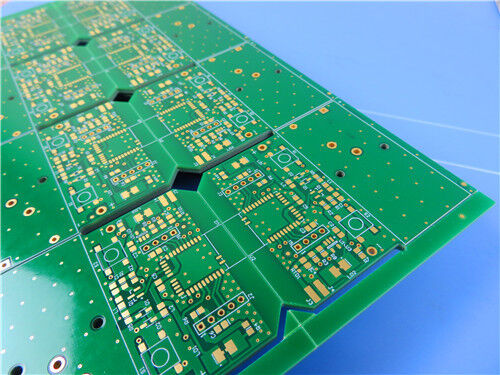
Founded in 2003, Shenzhen Bicheng Electronics Technology Co., Ltd is an established high frequency PCB supplier and exporter in Shenzhen China, severing cellular base station antenna, satellite, high frequency passive components, microstrip line and band line circuit, millimeter wave equipment, radar systems, digital radio frequency antenna and other fields worldwide for 18 years. Our high frequency PCBs are mainly built on 3 high frequency material brands: Rogers Corporation, Taconic and ...
Read more
Request A Quote
0+
Annualsales
0
Year
0%
P.C
0+
Employees
WE PROVIDE
THE BEST SERVICE!
You can contact us in various ways
Contact Us
Shenzhen Bicheng Electronics Technology Co., Ltd

quality Bicheng Newly shipped PCB & Rogers PCB Board factory

Events
Lastest company news about Middle East Conflict Disrupts Raw Material Supply, Driving Up PCB Prices
Middle East Conflict Disrupts Raw Material Supply, Driving Up PCB Prices

2026-05-13

Industry executives warn of soaring costs for resins, copper, and glass fiber, impacting everything from smartphones to AI servers.   The ongoing conflict in the Middle East is severely disrupting the supply of key raw materials, driving up the prices of printed circuit boards (PCBs) used in nearly all electronic devices — from smartphones and computers to advanced AI servers, according to industry executives and insiders. This new disruption adds further pressure on electronics manufacturers already grappling with soaring memory chip costs. It also highlights the widening impact of the conflict, which has already disrupted global supply chains, plastics, and oil supplies. In early April, an attack on a petrochemical complex in Jubail, Saudi Arabia, halted the production of high-purity Polyphenylene Ether (PPE) resin — a critical base material for manufacturing PCB laminates. According to a source, Saudi Basic Industries Corporation (SABIC), which supplies approximately 70% of the world’s high-purity PPE, operates the Jubail facility. Production has yet to resume, causing a severe global supply shortage of the material. The conflict has also significantly disrupted shipping routes in the Gulf region. PCB prices had already been climbing since late last year, driven by growing demand for AI servers. Three industry insiders say that demand has accelerated sharply since March, as manufacturers scramble to secure raw material supplies and mitigate cost surges. In a recent report, Goldman Sachs analysts noted that PCB prices jumped 40% in April alone compared to March. They added that cloud service providers are accepting further price increases, anticipating that demand will outpace supply for the foreseeable future. According to a recent report by Prismark, the global PCB industry is expected to grow by 12.5% to reach $95.8 billion by 2026. An executive at Daeduck Electronics — a South Korean PCB manufacturer whose clients include Samsung Electronics, SK Hynix, and AMD — told Reuters that the company has begun discussing price increases with customers. Speaking on condition of anonymity due to the sensitivity of the matter, the executive said his focus has now shifted from meeting clients to communicating with suppliers, as lead times for chemical materials like epoxy resin have extended from 3 weeks to as long as 15 weeks. The sharp rise in PCB prices is also due to shortages of other key materials, including fiberglass and copper foil. According to one source, copper foil prices have surged as much as 30% this year, with the acceleration picking up in March. Copper accounts for approximately 60% of the total raw material cost of PCB manufacturing, according to Shenzhen Hongxin Electronics Technology, a major Chinese PCB supplier to Nvidia. The Chinese company warned earlier this month that the Middle East conflict could drive up prices for key materials, including resin and copper. According to Shenzhen Hongxin, a standard multi-layer PCB now costs approximately 1,394 yuan per square meter, while high-end models used for AI servers cost around 13,475 yuan per square meter. Bicheng is a leading provider of custom PCB solutions. We closely monitor global supply chain trends to help our customers navigate market challenges and deliver high-quality, reliable boards for every application. Visit our website to learn more about our custom PCB services and current lead times.     =================================================================================== Copyright statement: The copyright of the information in this article belongs to the original author and does not represent the views of this platform. It is for sharing only. If there are copyright and information errors involved, please contact us to correct or delete it. Thanks!  
View More
Lastest company news about How much do you know about copper clad laminate (CCL)? Let me explain.
How much do you know about copper clad laminate (CCL)? Let me explain.

2025-09-10

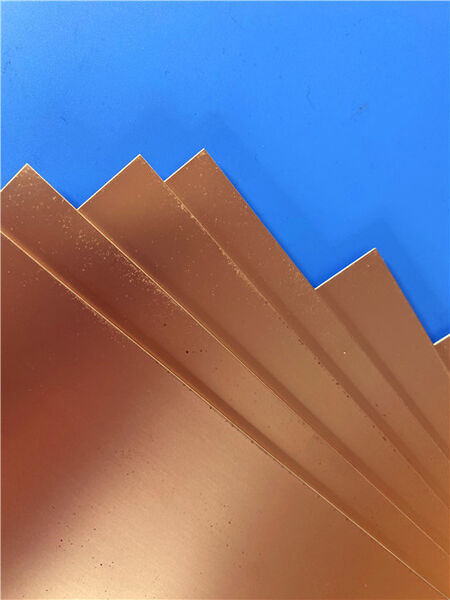
How much do you know about copper clad laminate (CCL)? Let me explain.   Copper clad laminate (CCL) is the core substrate for PCBs, with downstream applications in communications, computers, automotive, industrial, and medical fields. Its upstream suppliers include raw materials such as copper foil, resin, and glass fiber, while its downstream suppliers include PCB manufacturers and end-use electronic product manufacturers. This industry is highly cyclical and is entering a new growth cycle, driven by emerging demands such as 5G, AI servers, and automotive electronics.     CCL is a sheet material made by hot-pressing a reinforcing material impregnated with resin, coated on one or both sides with copper foil, and then hot-pressed. It fulfills the three main functions of conducting electricity, insulating, and supporting printed circuit boards, making it a core material for PCB manufacturing.     The CCL industry chain has a clear three-tier structure: upstream raw material supply (copper foil, glass fiber cloth, resin, filler, etc.), midstream CCL manufacturing, and downstream PCB applications.     The three core raw materials for CCL are copper foil, resin, and glass fiber cloth, accounting for 42%, 26%, and 19% of the cost, respectively, for a total of 87%.   If you require additional substrates, please feel free to contact us! Bicheng Company specializes in providing high-frequency circuit boards and raw materials.  
View More
Lastest company news about [Hotspot] Global PCB output value grows steadily, and AI capital expenditure heats up the underlying material track
[Hotspot] Global PCB output value grows steadily, and AI capital expenditure heats up the underlying material track

2025-07-16

On July 8, the PCB concept was hot. According to Prismark statistics, the global PCB output value is expected to grow to US$94.7 billion in 2029. The CAGR from 2024 to 2029 will reach 5.2%; the PCB output value of the Chinese market will reach US$49.7 billion in 2029.     In addition, in 2025, the capital expenditure of cloud factories such as Microsoft and Google will increase by more than 30% year-on-year. The capital expenditure of China's Alibaba and Tencent is expected to exceed 120 billion/80 billion yuan, and the demand for AI infrastructure will drive the accelerated expansion of the production capacity of underlying materials such as PCB.     The AI-driven technological innovation upcycle will last longer and generate greater market demand. China's PCB industry continues to upgrade and expand mid-to-high-end production capacity and deploy overseas production capacity, and its performance release is sustainable.     The overall demand for downstream electronics is currently showing a recovery trend, coupled with the continued upward momentum in innovative fields represented by AI and high-speed communications, which together support the growth in overall PCB demand. With the iteration of AI hardware performance, PCB will be further upgraded to higher specifications in terms of product technology and materials. Relying on its early technological accumulation and improved product competitiveness, Bicheng Technology has gradually improved its industry position in the high-end market, and its AI PCB supply share has continued to increase. Bicheng is expected to achieve rapid development by seizing the opportunities of AI development.       =================================================================================== Copyright statement: The copyright of the information in this article belongs to the original author and does not represent the views of this platform. It is for sharing only. If there are copyright and information errors involved, please contact us to correct or delete it. Thanks!
View More
Lastest company news about Wangling's F4B insulation material
Wangling's F4B insulation material

2025-06-13

Taizhou Wangling Insulation Material Factory was established in 1982. Its products are mainly high-frequency microwave materials, with 6 product series:   1. PTFE glass fiber cloth coated substrate F4B series, DK value 2.2~6.15 optional;   2. Microwave composite dielectric substrate TP/TF series, DK value 3.0~25 optional;   3. Organic polymer ceramic filled substrate WL-CT series, DK value 3.0, 3.38, 3.48, 4.4, 6.15;   4. PTFE quartz ultra-thin ultra-fine glass fiber cloth ceramic filled substrate F4BTMS series, DK value 2.2, 2.55, 2.65, 2.94, 3.0, 3.5, 4.5, 6.15, 10.2;   5. PTFE ceramic composite substrate TFA series, DK value 2.94, 3.0, 6.15, 10.26. Insulation cloth, anti-stick paint cloth.   The company has passed ISO quality management system certification and J engineering three certificates. It has been successfully supported by national key projects for many times, and has been commended by the national aerospace, aviation and manned space projects, and won the title of Outstanding Supplier of China's Aerospace. The products are widely used in aerospace, aviation, satellite communications, navigation, radar, infrastructure, electronic countermeasures, 3G, 4G, 5G communications, Beidou satellite system, mobile Internet, etc.       =================================================================================== Copyright statement: The copyright of the information in this article belongs to the original author and does not represent the views of this platform. It is for sharing only. If there are copyright and information errors involved, please contact us to correct or delete it. Thanks!
View More
Lastest company news about What are the important parameters of high-speed and high-frequency PCB boards?
What are the important parameters of high-speed and high-frequency PCB boards?

2025-05-09

The production process of high-speed and high-frequency PCB boards is basically the same as that of ordinary PCB boards. The key point to achieve high frequency and high speed lies in the properties of raw materials, that is, the characteristic parameters of raw materials. The main material of high-speed and high-frequency PCB boards is high-frequency and high-speed copper-clad boards. The core requirement is to have low dielectric constant (Dk) and low dielectric loss factor (Df). In addition to ensuring low Dk and Df, the consistency of Dk parameters is also one of the important factors to measure the quality of high-speed and high-frequency PCB boards. In addition, another important parameter is the impedance characteristics of the PCB board and some other physical properties.     The dielectric constant (Dk) of the high-frequency and high-speed PDB board substrate must be small and stable. Generally speaking, the smaller the better. The signal transmission rate is inversely proportional to the square root of the material dielectric constant. High dielectric constants are prone to cause signal transmission delays.     The dielectric loss (Df) of the substrate material of high-frequency and high-speed PCB boards must be small, which mainly affects the quality of signal transmission. The smaller the dielectric loss, the smaller the signal loss.     The impedance of high-frequency and high-speed PCB boards actually refers to the parameters of resistance and reactance. Impedance control is the most basic principle for our high-speed design, because PCB circuits must consider the installation of electronic components, and after the installation, the conductivity and signal transmission performance must be considered. Therefore, the lower the impedance, the better. Generally, major board manufacturers will ensure a certain degree of impedance error during PCB processing.     =================================================================================== Copyright statement: The copyright of the information in this article belongs to the original author and does not represent the views of this platform. It is for sharing only. If there are copyright and information errors involved, please contact us to correct or delete it. Thanks!
View More
Latest company case about Why RT/duroid 6006 is Perfect for Compact RF Designs? The High-Dk Workhorse: RT/duroid 6006 10mil PCB give you the answer
Why RT/duroid 6006 is Perfect for Compact RF Designs? The High-Dk Workhorse: RT/duroid 6006 10mil PCB give you the answer

2026-05-12

  Need to shrink your RF circuit without sacrificing performance? Meet the RT/duroid 6006 10mil Immersion Silver PCB.   This 2-layer board (134.8mm x 78.65mm) is built for engineers who want size reduction and low loss—especially at X-band frequencies and below.   Why you want it: High Dk, Smaller Circuits: With a dielectric constant of 6.15, this ceramic-PTFE material lets you shrink patch antennas and satellite comms modules significantly. Very Low Loss: Dissipation factor is just 0.0027 at 10 GHz. Your signal stays clean. No Solder Mask, No Silkscreen: This is a barebones, high-performance RF board. Top and bottom masks are "no"—just bare laminate and Immersion Silver pads. Tough as Nails: Td > 500°C and only 0.05% moisture absorption. This board survives harsh environments.   The Specs Snapshot: Stackup: 2-Layer | 35µm copper / 0.254mm (10mil) RT/duroid 6006 / 35µm copper Finish: Immersion Silver (flat, solderable, low loss) Traces/Holes: 5/6 mil trace/space | 0.3mm min hole size Stats: 46 components, 64 pads, 41 vias   Best For: Patch antennas, satellite systems, power amplifiers, and radar warning systems.   The Bottom Line: If you need high dielectric constant to cut board space, but refuse to give up low loss and thermal stability, the RT/duroid 6006 is your answer. No frills (mask/silkscreen), just pure RF performance.
View More
Latest company case about Why the RO4350B LoPro 4mil Immersion Gold PCB is a Game-Changer for RF & High-Speed Designs
Why the RO4350B LoPro 4mil Immersion Gold PCB is a Game-Changer for RF & High-Speed Designs

2026-05-08

Why the RO4350B LoPro 4mil Immersion Gold PCB is a Game-Changer for RF & High-Speed Designs     Introduction In the world of high-frequency circuitry, material selection is everything. Standard FR-4 often falls short at gigahertz frequencies, causing excessive signal loss and thermal headaches. Enter the RO4350B LoPro PCB.   We recently got our hands on a specification sheet for a specific 2-layer variant (4mil thick with Immersion Gold finish), and it ticks all the boxes for demanding RF, microwave, and high-speed digital applications. Here is a deep dive into why this particular board—with its 78mm x 101mm footprint—is built to perform.     1. The Core: Rogers RO4350B Low Profile The hero here is the substrate. Unlike standard RO4350B, this uses Low Profile (LoPro) copper foil technology. Rogers has essentially reverse-treated the foil to bond better with the dielectric. The result? Lower conductor loss, which translates directly to improved insertion loss and signal integrity.   If you are designing circuits above 40 GHz, standard laminates create a bottleneck. The LoPro technology keeps your signal clean and powerful.     Key Stats at 10 GHz/23°C: Dielectric Constant (Dk): 3.48 ± 0.05 (Stable frequency performance) Dissipation Factor (Df): 0.0037 (Very low loss)     2. The Build: Ultra-Thin, Ultra-Rugged At just 0.2mm (4mil) finished thickness, this board is incredibly thin. But don't let its stature fool you; this is a thermally tough board. Stackup: Copper (35μm) | RO4350B LoPro (0.102mm) | Copper (35μm) Thermal Conductivity: 0.69 W/mK (Much higher than FR-4, pulling heat away from hot spots efficiently). High Temperature Stability: Tg > 280°C and Td > 390°C. This board survives lead-free soldering reflow cycles without breaking a sweat.     3. The Finish: Immersion Gold (ENIG) Why Immersion Gold over HASL or bare copper? For a board this precise, ENIG is mandatory. Flatness: With a 4mil thickness and fine traces (5/6 mils), you need a perfectly planar surface for soldering small components. Corrosion Resistance: Gold protects the underlying nickel from oxidation. Wire Bonding: It allows for aluminum wire bonding if needed.     4. Design & Manufacturing Details This specific design is a 2-layer rigid board with some tight tolerances that prove the manufacturing capability: Minimum Trace/Space: 5/6 mils (Standard for complex RF routing). Minimum Hole Size: 0.25mm (Roughly 10mils). Vias: 26 vias, 0.25mm minimum, with a 20 μm copper plating thickness. Note the absence of blind vias—this keeps fabrication costs lower while utilizing the full 2-layer stack. Solder Mask: Blue on top, none on the bottom. Silkscreen: White on top only. The Layout Stats: 24 Components 49 Total Pads (31 Thru-hole, 18 Top SMT) 2 Nets (Very clean layout).     5. The "Why": Benefits for Your Application Why spec this specific board over a standard RF board?   A. Lower Insertion Loss Because of the LoPro foil and RO4350B dielectric, you can push operating frequencies beyond 40 GHz without the signal attenuation seen in standard materials.   B. Reduced PIM (Passive Inter-modulation) If you are building base station antennas, PIM is the enemy. The RO4350B system inherently reduces unwanted signal mixing.   C. Thermal Reliability The Z-axis Coefficient of Thermal Expansion (CTE) is 32 ppm/°C—closely matched to copper (17 ppm/°C). This means your plated through holes won't crack under thermal cycling.   D. Standard FR-4 Processing Even though this is a high-performance Rogers board, it doesn't require nasty "sodium etch" via preparation. It fabricates using standard epoxy/glass (FR-4) processes, saving you money and lead time.     6. Ideal Applications Based on the data, this board is built for the intersection of digital and RF: High-Speed Digital: Servers, routers, and high-speed backplanes (where signal integrity is king). Telecom Infrastructure: Cellular base station antennas and power amplifiers. Satellite Systems: LNBs for direct broadcast satellites. IoT & RFID: RFID tags requiring high frequency accuracy.     The Verdict The RO4350B LoPro 4mil Immersion Gold PCB is a professional-grade solution for engineers who refuse to compromise. It combines the electrical performance of a high-end RF laminate with the manufacturability of an FR-4 board.   With 100% electrical testing prior to shipment and compliance with IPC-Class-2 standards, this specific 78x101mm board is ready for worldwide deployment.   Need a reliable 2-layer RF board? This is your benchmark.
View More

Shenzhen Bicheng Electronics Technology Co., Ltd
Cooperative Partners
map map 30% 40% 22% 8%
map
map
map
WHAT CUSTOMERS SAYS
Rich Rickett
Kevin, Received and tested the boards - thanks very much. These are perfect, exactly what we needed. rgds Rich
Olaf Kühnhold
Ruth, I got the PCB today, and they are just perfect. Please stay a little patience, my next order is coming soon. Kind regards from Hamburg Olaf
Sebastian Toplisek
Hi Natalie. It was perfect, I attach some pictures for your reference. And I send you next 2 projects to budget. Thanks a lot again
Daniel Ford
Kevin, Thanks, they were perfectly made, and work well. As promised, here are the links for my latest project, using the PCBs you manufactured for me:
CONTACT US AT ANY TIME!
Sitemap |  Privacy Policy | China Good Quality Bicheng Newly shipped PCB Supplier. Copyright © 2016-2026 Shenzhen Bicheng Electronics Technology Co., Ltd . All Rights Reserved.